

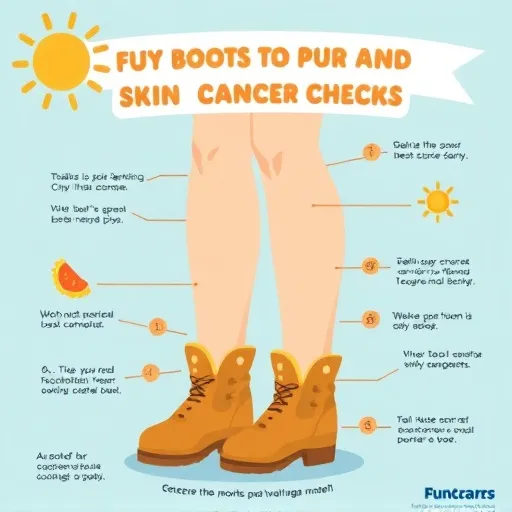
Hidden skin cancer r
Why Boots and Skin Cancer Checks Belong in the Same Conversation
Here's the deal: skin cancer doesn't play favorites when it comes to body parts. Your face, arms, and back get all the sunscreen glory, but the skin on your feet and lower legs? Surprisingly vulnerable. And when you're rocking boots day after day, those areas stay covered up—which means you're way less likely to catch changes until something's been quietly developing for who knows how long. That's the whole reason a regular boots skin cancer check deserves a spot in your routine.
Think about it for a second. A tiny new spot on your forearm? You'll probably notice it in the mirror within days. But a similar spot on the top of your foot or tucked between your toes? It could hide for months inside a sock and a boot. That's exactly why dermatology professionals keep hammering home the point that a proper skin cancer check should cover everywhere—including the parts of your body that basically never see daylight. A boots skin cancer check isn't overkill; it's just smart.
In 2026, we've got better awareness tools than ever before. Smartphone apps can help you track moles over time, wearable UV sensors are way more accessible, and telehealth dermatology consultations have gone completely mainstream. But none of that replaces a good old-fashioned self-check—especially for the areas that boots keep hidden. Honestly, a boots skin cancer check is still one of the most underrated habits out there.
Who's Most at Risk? Hint: It's Not Just Sun Worshippers With Tan Lines
You might assume that skin cancer on the feet only happens to people who walk around barefoot in sunny climates. Not quite. Several factors raise your risk, and some of them have absolutely nothing to do with sun exposure:
- Occupational boot wearers: Construction workers, farmers, hikers, and anyone in heavy-duty footwear spends hours with their feet covered. Sweat, friction, and lack of airflow make it super easy to overlook skin changes—which is exactly why a boots skin cancer check matters for this crowd.
- People with a history of sunburns: Even a few blistering sunburns earlier in life can increase risk in areas that were exposed at the time.
- Those with many moles or atypical moles: If you've got a lot of them, your baseline risk is higher—and yes, that includes moles on your feet. A boots skin cancer check helps you keep tabs on them.
- Individuals with weakened immune systems: Immune function plays a real role in how your body handles abnormal cells.
- Anyone with a family history: Genetics matter more than most people realize.
The bottom line? If you wear boots regularly, you're already in a group that should be paying attention. Add any of the above factors, and a regular boots skin cancer check becomes even more important. Don't sleep on it.
What Exactly Should You Be Looking For During a Boots Skin Cancer Check?
Okay, so you're on board with checking your feet and lower legs. But what are you actually looking for? Here's a practical breakdown so your boots skin cancer check actually catches something useful.
The classic ABCDE framework remains the gold standard for spotting potential melanoma, and it works just as well on your feet as anywhere else:
- A — Asymmetry: One half of a mole or spot doesn't match the other.
- B — Border: Edges that are irregular, ragged, or blurry rather than smooth and well-defined.
- C — Color: Multiple colors within a single spot—shades of brown, black, red, white, or even blue.
- D — Diameter: Anything larger than a pencil eraser (about 6mm) deserves a closer look, though smaller spots can still be concerning.
- E — Evolving: Any change in size, shape, color, or texture over time. This one is arguably the most important piece of the boots skin cancer check puzzle.
Skin cancer on the feet doesn't always follow the ABCDE rules, though. Keep an eye out for these during your boots skin cancer check:
- A sore that doesn't heal, especially one that bleeds or crusts over repeatedly
- A new spot or growth that looks like a wart, ulcer, or even a bruise that never fades
- Dark streaks under a toenail that aren't from trauma (this can be a sign of subungual melanoma)
- Swelling, redness, or a bump that persists for weeks
- Any area that feels different—itchy, tender, or painful—without an obvious cause
Here's a key point from dermatology specialists: skin cancer on the feet is often mistaken for something harmless—a corn, a callus, an ingrown toenail, or a bruise from tight boots. That's why it's crucial to check regularly and know what's normal for your feet. If something sticks around for more than a couple of weeks, get it looked at. A thorough boots skin cancer check is your first line of defense.
How to Actually Do a Proper Boots Skin Cancer Check Step by Step
This doesn't need to be complicated. A thorough boots skin cancer check takes about five to ten minutes, and you can do it right after you take your boots off at the end of the day. Here's a step-by-step approach:
Step 1: Set up your space. Find a well-lit room with a mirror. A handheld mirror is incredibly helpful for angles you can't see directly. Some people find it easier to sit on the edge of the bathtub with a mirror propped up.
Step 2: Check the tops and sides of your feet. Look carefully at the skin on the top of each foot, the sides, and around the ankles. This is where boots rub and where sun exposure can happen if you wear sandals in summer. Pay attention to any new spots or changes in existing moles.
Step 3: Don't skip the soles. Use your mirror to inspect the bottom of each foot. This is a common hiding spot for acral melanoma, a type of melanoma that occurs on the palms and soles. It's less common but tends to be diagnosed later because people simply don't look there. Your boots skin cancer check should always include this area.
Step 4: Check between your toes. Spread your toes and look at the skin between them. This area gets zero sun but can still develop skin cancer—and the warm, moist environment inside boots makes it easy to miss changes.
Step 5: Inspect your toenails. Look at each toenail carefully. Check for dark streaks, bands, or discoloration that extends from the cuticle to the tip. While toenail fungus is super common, dark streaks are something to have checked by a professional.
Step 6: Check your lower legs and ankles. Extend your check up to your calves and shins—especially if you wear shorter boots. Use the mirror for the backs of your legs.
Step 7: Document and track. Take photos of anything that catches your attention. In 2026, there are plenty of apps designed to help you track moles over time, comparing new photos with old ones. This is a game-changer for spotting the "E" in ABCDE—evolution—and it makes your boots skin cancer check way more reliable.
How Often Should You Do a Boots Skin Cancer Check?
Most skin health professionals recommend a full-body self-check once a month. For your boots skin cancer check, monthly is a solid baseline. If you're in a higher-risk group—fair skin, lots of moles, family history, or a personal history of skin cancer—consider doing your boots skin cancer check more often, or at least being extra thorough.
And here's something people often forget: an annual professional skin exam is still valuable, even if you're diligent about self-checks. A trained dermatology professional has tools you don't—like dermoscopy, which uses a special magnifying device to look at skin structures beneath the surface. Many clinics now offer full-body skin exams that explicitly include the feet and nails. If you've never had one, 2026 is a great year to start.
Boot Care and Skin Care: More Connected Than You'd Think
Here's a practical angle that doesn't get discussed enough: your footwear habits affect your skin health. Tight boots that rub create chronic irritation, and some research suggests that repeated friction and inflammation may contribute to skin changes over time. Beyond that, boots trap moisture, which can cause fungal infections and skin breakdown—and those issues can mask or mimic more serious concerns. A boots skin cancer check helps you tell the difference.
A few simple habits go a long way:
- Rotate your boots: Give each pair a day off to dry out completely. Moisture is not your friend.
- Choose moisture-wicking socks: Merino wool and synthetic blends outperform cotton for keeping feet dry.
- Make sure boots fit properly: Too tight means friction; too loose means rubbing. Get fitted properly if you're unsure.
- Air your feet out: Take boots off when you get home and let your feet breathe. Sounds trivial, but it matters.
- Moisturize—but not between the toes: Dry, cracked skin on heels and soles is common in boot wearers. Use a good moisturizer on dry areas, but keep the spaces between toes dry to prevent fungal issues.
When to See a Professional Instead of Relying on Self-Checks Alone
Self-checks are great for awareness, but they're not a diagnosis. If you notice anything that concerns you during a boots skin cancer check—a new spot, a changing mole, a sore that won't heal, a dark streak on a toenail—book an appointment with a healthcare professional. Don't wait to see if it goes away on its own. Early detection is the single biggest factor in successful outcomes for skin cancer, and that's true whether the spot is on your nose or the sole of your foot.
Also, don't let embarrassment stop you. Feet can feel like an awkward body part to show a doctor. Trust us: dermatology professionals look at feet all day. There's nothing they haven't seen. The five minutes of mild discomfort is infinitely better than the alternative. Your boots skin cancer check habit is what gets you in the door at the right time.
A boots skin cancer check isn't glamorous. It's not the kind of thing you'll bring up at dinner parties. But if you wear boots regularly, it's one of the simplest, most effective habits you can build into your routine. Five to ten minutes a month, a handheld mirror, and a bit of attention to what's normal for your feet—that's all it takes. Know your skin. Check it regularly. Pay attention to skin changes. And when in doubt, get it checked out. Your feet carry you everywhere—they deserve a little care and attention in return. So next time you kick off your boots, take an extra minute for a quick boots skin cancer check. Your future self will thank you.